In order to read beyond preview chapters, you must be logged in with a free account. You may log in or create an account now.
Please refresh the page after logging in.
Unlimited Reading
If you love erotic fiction and romance, a premium subscription is for you! As a premium member, you'll have full access to the entire library of hundreds of stories from our curated collection of incredible authors.
Premium members also get access to our visual erotica section. These unique stories, created by Lisa X Lopez, feature audio and video to create erotic story-telling experiences like you're never seen.
Get your premium plan today, and cancel at any time!
Cold Open
The ON AIR sign over the studio window had burned the same shade of red for nine years, and Wilhelmina Greer had watched it come on more times than she'd bothered to count. It had never once looked like anything other than a held breath.
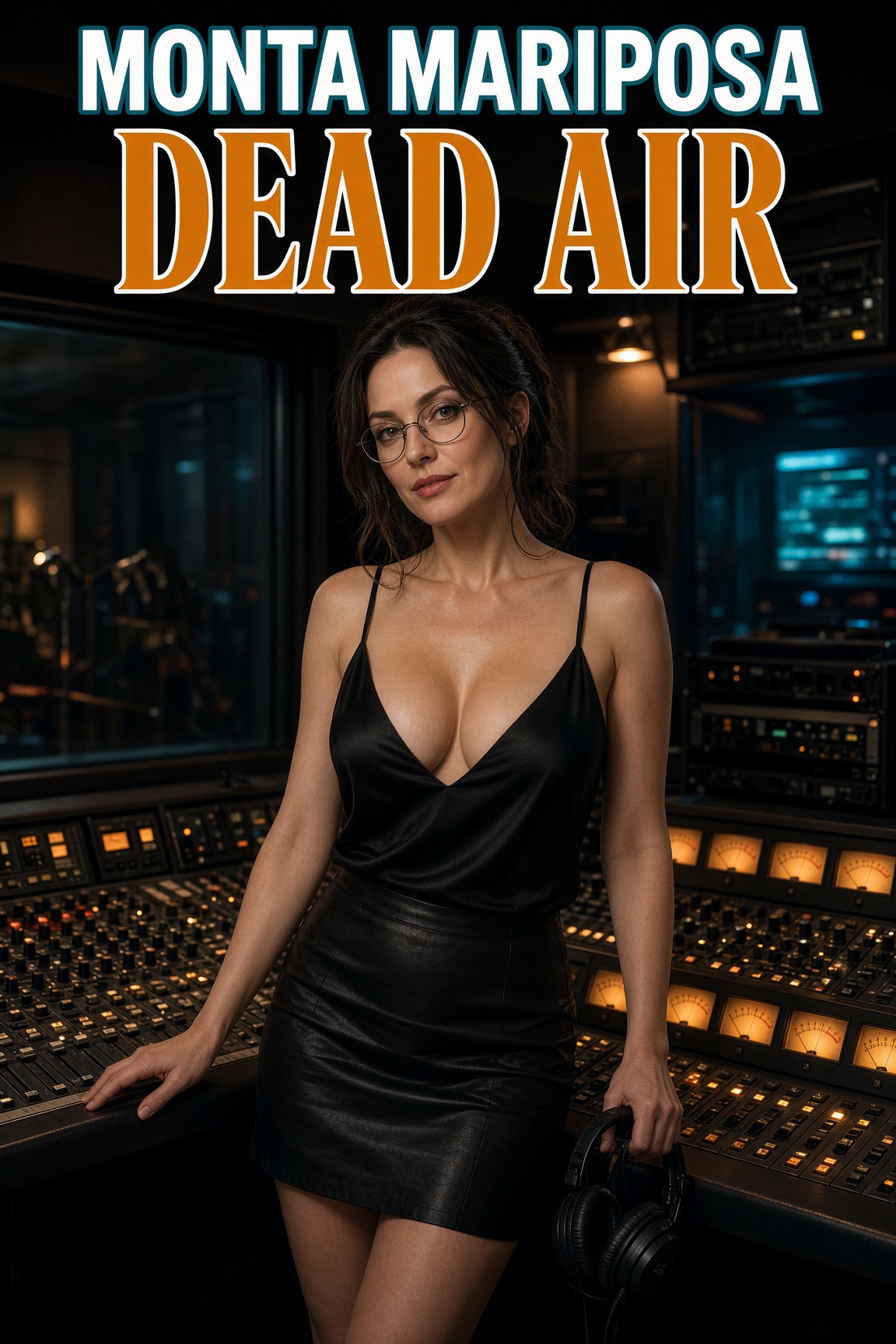
Just shy of midnight. She ran the board the way she did everything: early, in order, without sentiment. Faders at preset. Phone hybrid checked. Delay buffer armed, seven seconds of insurance against the profane and the accidental. The glass between the control room and Studio B was clean tonight; the cleaning crew had finally listened. Through it she could see her husband in his chair, script pages squared on the desk in front of him, headphones around his neck, waiting as he always waited, beautifully and without any urgency at all, as if midnight were a tide that knew to come to him.
Nine years of marriage. Nine of the show, which had gone to air three months after the honeymoon and had never missed a night she hadn't personally excused it for. She had produced Frank almost exactly as long as she had loved him, and the seam between the two jobs had long since dissolved. Cuing him was a kind of touching. She'd have said so if anyone had asked, and nobody asked, because nobody saw what she saw, which was everything.
Before she could settle into the rhythm, the control room door opened on the particular weather of Luther Young. He came in preceded by his own apology.
"I know, I know. Forty minutes to air. Bad time." He set a coffee on her console, which she did not want, and leaned on the counter, which she did not permit, and then straightened up when she looked at him, because Luther was, beneath the harried surface, a man who knew exactly whose approval he needed. "You got a minute?"
"I've got eleven."
"That's plenty. It's, uh. It's about the book."
The book was the ratings. Luther talked about ratings the way other men talked about their livers, with a kind of doomed fondness. Wilhelmina had already seen the numbers: down in the demo, streaming stagnant for three quarters running. After Midnight was a beloved institution, which in public radio meant it was losing money with dignity.
"Luther. Whatever it is, say it while I can still fix it."
"That's the thing. It's already fixed. I already fixed it." He winced at his own sentence. "I hired somebody."
Wilhelmina's hands stayed on the board. One fader, then another, touching nothing, adjusting nothing. A producer's hands, finding their places.
"Hired somebody," she repeated.
"A co-host. Trial basis. Six weeks, and if the numbers move we make it permanent, and if they don't we've lost nothing, and I know, I know, I should've called you first, but the board already voted, so." He spread his hands, the gesture of a man setting down something heavy he'd carried too far. "Her name's Marta Dobbs. She wrote the column. 'Ask Marta.' In the paper, before the paper..."
"I know the column." Everyone in radio knew the column. Nine years of candid, unnervingly honest advice about desire and marriage and the things people did in the dark and then worked up the nerve to confess. "She's an advice columnist. This is a call-in show. That's a whole different animal."
"It's really not. It's people, Wilhelmina. It's people talking about what they want. That's the animal." He checked his watch. "She's downstairs. I'll bring her up."
"Luther." He stopped at the door. She kept her voice level, pleasant, the voice she used on difficult guests and pledge-drive volunteers. "You put someone in my studio at midnight without a rehearsal, and whatever happens on air in the first week is what the audience decides the show is. You understand that."
"Six weeks," he said, and was gone.
Wilhelmina looked at the glass. Frank had heard none of it, headphones off, but he was watching her through the window as he always did before air, checking her face as a pilot checks instruments. She gave him the nod: all clear, mostly. He smiled, and something in her chest unlocked a quarter turn.
Then the door again, Luther, and a woman she'd seen only in a byline photo ten years out of date.
Marta Dobbs was not what the byline had promised, or she was exactly what it had promised and Wilhelmina hadn't believed it. Taller than expected. Dark hair in a severe cut. A gray blazer over something that had no business being under a blazer at a public radio station at midnight, and an expression of unhurried appetite, like a person who'd arrived early to her own life and was enjoying the wait. She took the studio in with one sweep: the glass, the board, Wilhelmina behind it. Then Frank.
"Oh," she said, and smiled, and it was the smile of someone recognizing a room she'd been told about. "It's smaller than it sounds."
Everything, Wilhelmina thought, is smaller than it sounds.
Introductions. A handshake. Marta's grip was warm and dry and lasted exactly one beat longer than polite. "The producer," Marta said. "Luther talks about you like you're weather. 'Don't worry, Wilhelmina'll handle it.' I liked that. Very few men know how to talk about a competent woman without apologizing for her."
"Luther's a futurist," Wilhelmina said.
Frank stood, hand extended, and here was the thing Wilhelmina watched for, the thing only she would catch: he glanced at her first. Just a flick, just for clearance, an old habit of their marriage that had started as a joke and calcified into liturgy. Marta caught it too. Wilhelmina saw her catch it, saw the small intake of attention, like a bird dog going still.
"Marta," she said, shaking Frank's hand. "Your listener number four, by the way. I've listened since the first night. You're better than you know, and you know more than you say. We're going to fix the second part."
Frank laughed, that low velvet sound the microphone loved. "That sounds like a threat."
"It's a promise. Threats are for people you don't like."
With minutes to spare. Wilhelmina's voice in their ears, calm, routine, the liturgy: mics checked, levels set, the open cued for midnight exactly. She watched Marta take the guest chair, watched her refuse to take it properly, sitting sideways with one arm over the back, oriented not to the desk but to Frank, a degree or two off axis, close enough that her knee could have touched his. Could have. Didn't. Yet, said the placement, in a language Wilhelmina was alarmed to find she could read.
Her hand went to the talkback. Stopped.
The mic boom over Frank's head had hung at the same angle for nine years. Wilhelmina had set it herself the first week and it had never needed to move, because Frank moved for the mic and not the other way around, another item on the long list of things that made him easy to love. But Marta stood, without asking anyone, and crossed the studio, and put her hand on the boom.
"May I?" she said, already doing it.
She leaned in over Frank's shoulder, one hand on the shock mount, the other, briefly, feather-light, on his shoulder itself, steering him back two inches into his chair. She tilted her head to sight down the pop filter's axis like an engineer sighting a line, close enough that her hair moved with his breath, and Frank went still. Not uncomfortable-still. The particular stillness of a man being handled by someone who knows what she's doing. The stillness Wilhelmina had only ever produced in him herself, in other rooms, with the door shut.
In the red half-light of the sign, Wilhelmina watched her husband's throat move as he swallowed.
Her finger was on the talkback. All she had to do was press it and say, in the voice of authority, the voice that had cued nine years of midnights: levels are fine, sit down, nobody touches the boom. The board was hers. The studio was hers. The midnight was hers, and the man inside it most of all, and the entire apparatus of her life had been arranged so that a moment like this would arrive already answered.
She didn't press it.
The boom settled. "There," Marta said, to Frank, at a distance Wilhelmina could not hear but could absolutely read. "Now the microphone gets all of you."
She went back to her chair. Frank looked through the glass at his wife, and there was a question in his face, an old question, the one that meant: is this all right? He needed permission. He had always needed permission; it was one of the things she loved about him, the way a lock loves a key.
Wilhelmina gave him the nod.
Midnight came on the network tone, and she cued the open, and Frank's voice went out over the city the way it did every night, warm and low, a little sad, which was the exact frequency at which Pittsburgh after midnight liked to be talked to.
"This is After Midnight. I'm Frank Greer. It's midnight in the 'Burgh, and if you're up, you're one of us. Who's first?"
The calls came. Wilhelmina rode the board and did her job, screening calls, punching the hybrid, and watched.
Marta was good. That was the complication. Wilhelmina had prepared herself for a dozen failures, for overtalk and dead air and the amateur's sin of treating radio like print, and instead Marta listened like a professional, which is to say she listened like a lover: total, flattering, dangerous. When the first caller, a trucker somewhere on I-80, started talking about his marriage, about the nights his wife turned her back to him in bed and he lay there cataloguing the distance, Marta leaned into her mic, into Frank's airspace, and said, "Tell me what you do with the distance. Because I promise you she's doing something with it too."
And Frank, instead of steering it back into his own rhythm, made a low sound of assent and gave her the caller, handed it over like a duet partner, and Wilhelmina sat with her hand hovering over the dump button she never used and did not move.
The trucker talked. Marta talked. Frank came in underneath them both, one velvet line at a time, and the segment, which should have been a wreck, was something else, something with a pulse, and the switchboard lit up with callers who had apparently spent years waiting to be asked what they did with the distance.
Wilhelmina watched through the glass and performed an inventory she did not want to be taking. The degree of Marta's lean. The place where her knee had, at some point in the second hour, come to rest against the arm of Frank's chair. The way Frank looked at Marta when she talked, which was not the way he looked at Wilhelmina. And then the way he looked at Wilhelmina through the glass when Marta said something true, which was exactly the way he looked at Wilhelmina, and that was the part that put heat low in her stomach, that crossed wires she'd installed herself, that made her want to press the talkback and say nothing at all just to hear him wait for her voice.
Well past one, a caller asked Marta, straight out, whether she was seeing anyone, with the naked hope of the midnight audience, and Marta laughed, a real laugh, and said, "Not tonight. Ask me again in six weeks," and looked at Frank, and then, deliberately, at the glass. At Wilhelmina. Held it a full second.
Wilhelmina's hand was on the fader. She took the call, thanked the listener, moved the show along, smooth as nine years.
But her pulse had changed, and she was a professional, and professionals notice when the levels stop matching the meter.
When the hour turned, she cued the close. Frank did the outro, that melancholy grace note he did better than anyone in the business, goodnight and drive safe and we're all up together, and the light went from red to dead, and the studio exhaled.
Luther appeared in the doorway, radiant, holding his ratings tablet like a reliquary. "Did you hear the phones? Did you hear the phones, Wilhelmina?"
"I heard the phones."
"Six weeks," he said, to the room, to God, and left.
Marta gathered her coat. At the control room door she stopped, and looked at Wilhelmina through the glass first, as people were supposed to, and then came around into the control room itself, into Wilhelmina's territory, uninvited, and stood by the board.
"You didn't stop me," she said.
"The mic was a quarter inch off. You were right to fix it."
"That's not what I meant."
"I know it's not."
Marta studied her for a moment, and there was nothing casual in it; it was the same total listening she'd given the trucker, and Wilhelmina felt it land on her skin like weather. "Nine years," Marta said. "You've been in this chair nine years, watching him through that glass. You're very good at it. Watching."
"It's the job."
"Sure," Marta said. "It's the job." She smiled, took her hand off the console, and left the word sitting there between them like a fader set to open.
Wilhelmina sat alone in the control room after they'd gone, Frank's laugh still in her ears from something he'd said at the elevator, the ON AIR sign dark, the city running its late errands outside. She reached out and, out of pure ritual, touched the mic fader. Down. Up. A quarter inch.
She left it a quarter inch open.
She could not have said, if anyone had asked, for whom.